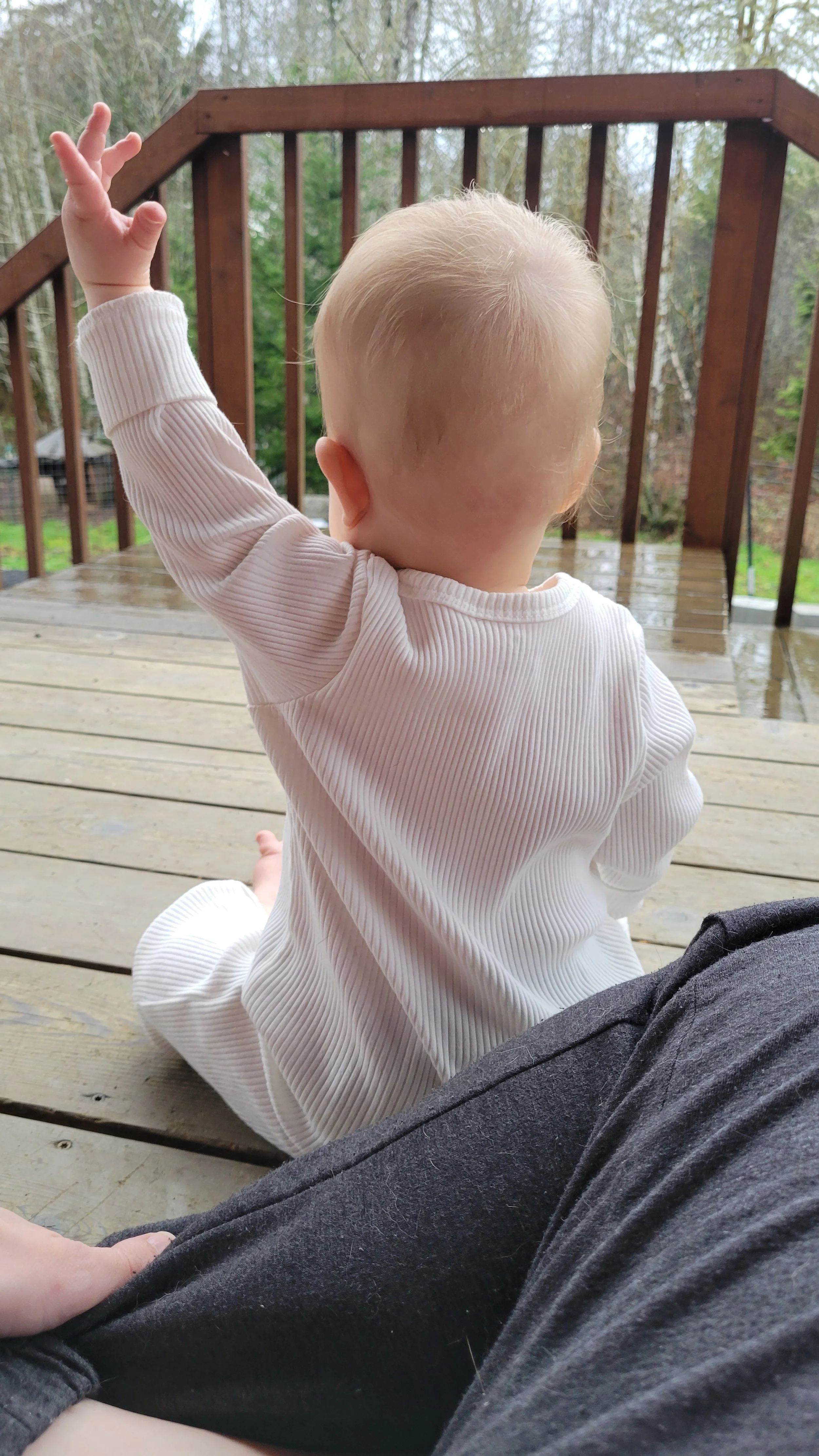
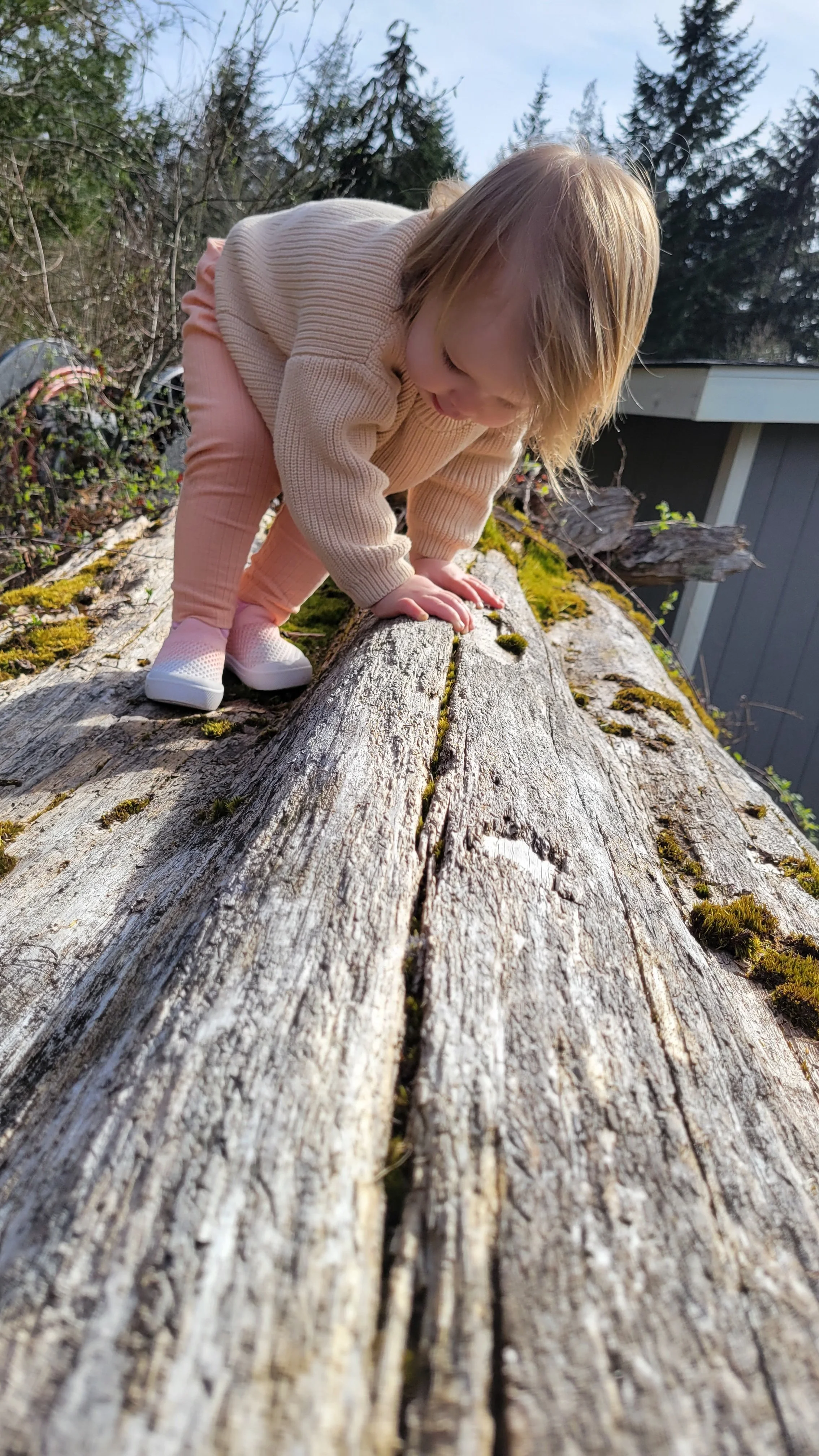
There are two things that bring my daughter immense joy—blueberries and going outside. Often when we step outdoors, she rarely cares what we are doing. Whatever it is, she smiles the entire time.
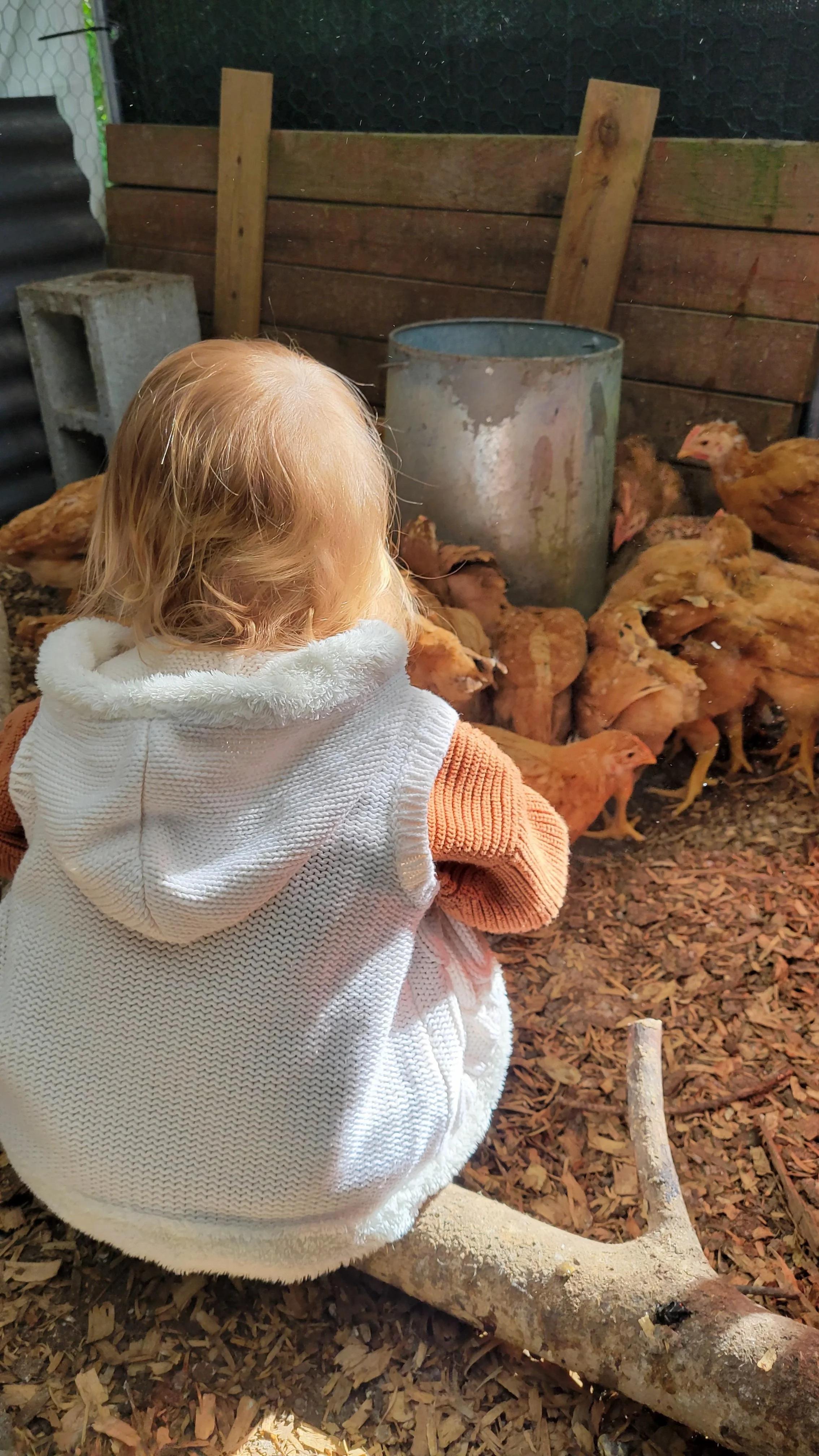
Last week, she was so incredibly sick that she rarely left her favorite spots inside. But Saturday morning arrived with sunshine that felt long overdue, and she begged me to take her out to do the farm chores. She helped me let the chickens and ducks out and refill their food and water. She danced in the driveway, and it was obvious, watching her, that her heart was full.
What the Farm Gives Her Without Asking Anything in Return
Watching her that morning, I realized the farm gives her something I could never explain in words—only something she can live inside of. Every time I watch her pet chickens or water the garden, I feel the love in my chest swell and mirror her joy.
It is easy, when farming, to become so tightly wound around efficiency that we lose sight of purpose. Each completed task brings a brief moment of relief and pride, only to be minimized by the list of to-dos that never seems to end. But watching her love the life we are building for her reminds me to slow down, smell the dirt and forest in the sunshine, and be present in each moment.
She has had moments like this before, when she is sick and the only real cure for how poorly she feels is calling to her from outside. It’s in these moments that I reflect on just how much I love farming with my daughter rather than despite her. When she was very young, I farmed around her. Now I farm with her at my side, and everything feels more meaningful and purposeful. Every chore becomes a lesson about what we are doing and why, and she is eager to soak it all in.
This farm serves her in ways I can’t schedule or manufacture. She learns to exist in a place of belonging rather than performance. She learns to feel joy without expectations. In a world where most activities are structured, rigid, and goal-oriented, it is easy for children to feel like they are never quite enough. On the farm, she learns by doing, exploring, and observing. She doesn’t need to be entertained or stimulated, because the farm meets her where she is, not where she “should be.”
Learning to Mother Without Measuring
Working the farm alongside my daughter has taught me a different kind of patience. It has asked me to release control and loosen my grip on efficiency in favor of watching her learn.
Motherhood changed how I farm. Gone are the days of working sunup to sundown without rest or expecting swift accomplishment. The rhythm is slower now. The definitions of success are softer. And while much of my efficiency has been lost in the name of presence, the pride I feel watching her grow is a reminder that this pace is worth it.
That doesn’t mean I am sheltered from tension. Exhaustion is a constant companion in motherhood. After the loss we faced on our farm in 2024, finding the strength to begin again felt especially heavy. Anxiety about messiness and fear of uncertainty often creep in. With two working parents, long daily commutes, raising an infant (at the time), it would have been easy to stay down and let it all go.
But in the stillness of last winter, I heard the same calling from outside—the same voice that calls to my daughter was calling me to get back up. I can’t add more minutes to the day, and I have never been more tired than I am in this season of my life. Still, I need this work. This life shapes me and strengthens me, just as it shapes her.
Lessons the Land Teaches Quietly
The land on our farm is a living teacher. Through daily chores, she learns care, responsibility, and empathy. She is also learning the cycles of life and loss—lessons that will only deepen as she grows.
These lessons are not structured or scripted. They arrive quietly: through morning chores, through changing seasons, through repetition.
There is immense value in her witnessing real work and real compassion. When we plant seeds, we talk about gentleness and patience. When we refill waterers, we talk about responsibility and care. When animals die to feed us, we talk about sacrifice, respect, and stewardship. The land teaches her without textbooks or formal lessons.
On the Days This Life Feels Heavy
We have known hard days. Illness. Financial strain. The weight of raising a young child while growing a farm. Long days that blur into doubt.
But on those days, I return to moments when the sun brushes her skin, when she dances in the driveway, when her heart is full. These moments aren’t about perfection or self-sufficiency. They are about presence, grounding, and the beauty of a shared life. This life isn’t easier—but it is rooted.
Each time I choose her joy over efficiency, she learns she is needed. She learns in her own way. She learns that mistakes are okay and that they can be fixed gently. Through it all, I hope she carries her love for farm life with her, wherever life leads.
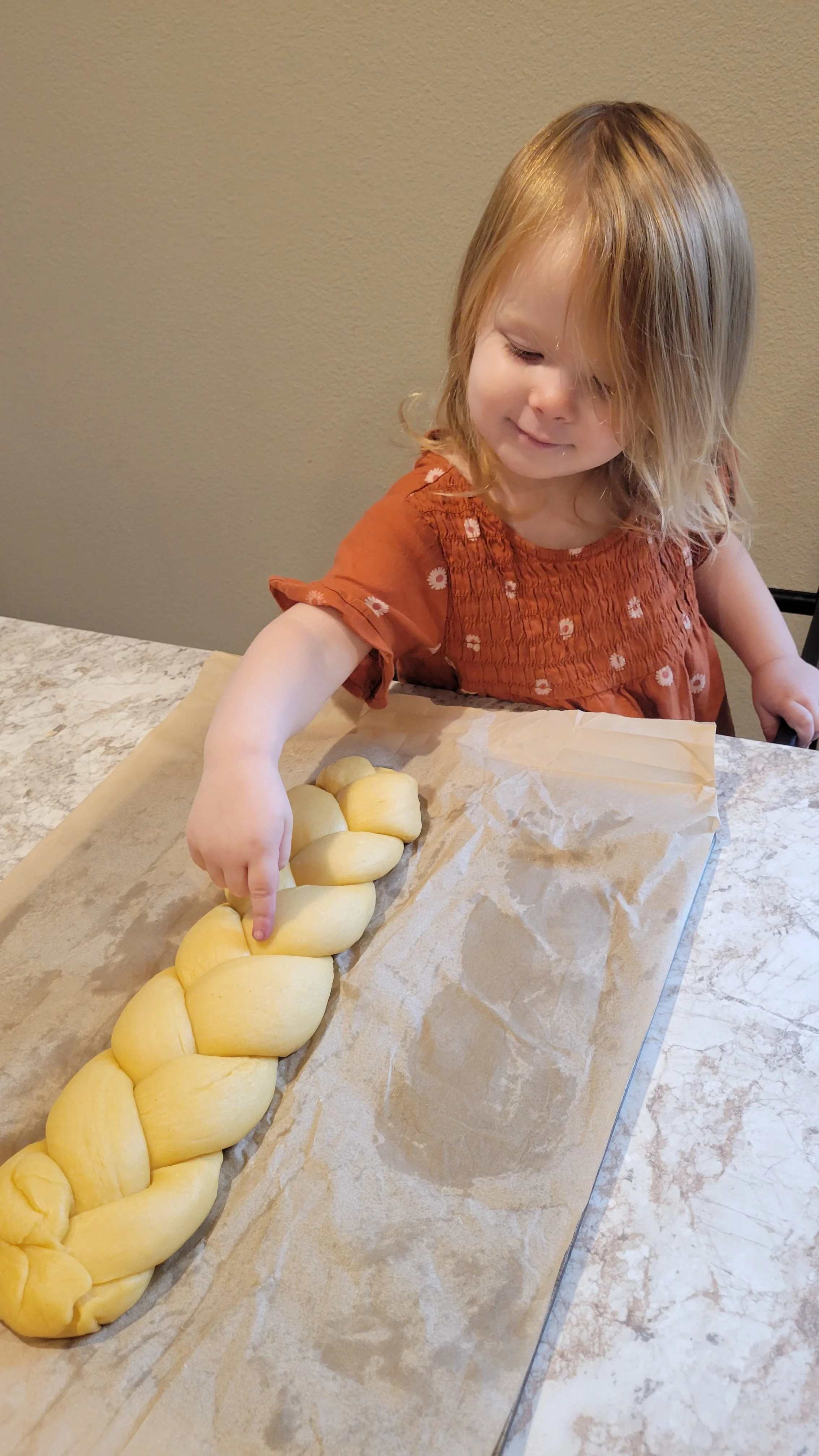
She helps me make Braided Egg Bread. And on these days, when flour ends up all over the kitchen, it takes much longer start to finish, and things don’t always go right, I firmly believe that she is learning more than just making bread. By sharing the passions of my heart with love and support and patience, she can start to grow a passion for those things, too.
Choosing This Life, Over and Over
Every day, I choose the farm. But more importantly, I choose motherhood within it.
This life matters because it gives my daughter space to be herself, to make real mistakes, and to learn how to rise again. The farm doesn’t ask her to be strong—it simply invites her to be present.
And if all this life gives her is a love for sunlight, fresh air, and feeling needed, then it has already given us enough.