Starting Over: Rebuilding the Flocks
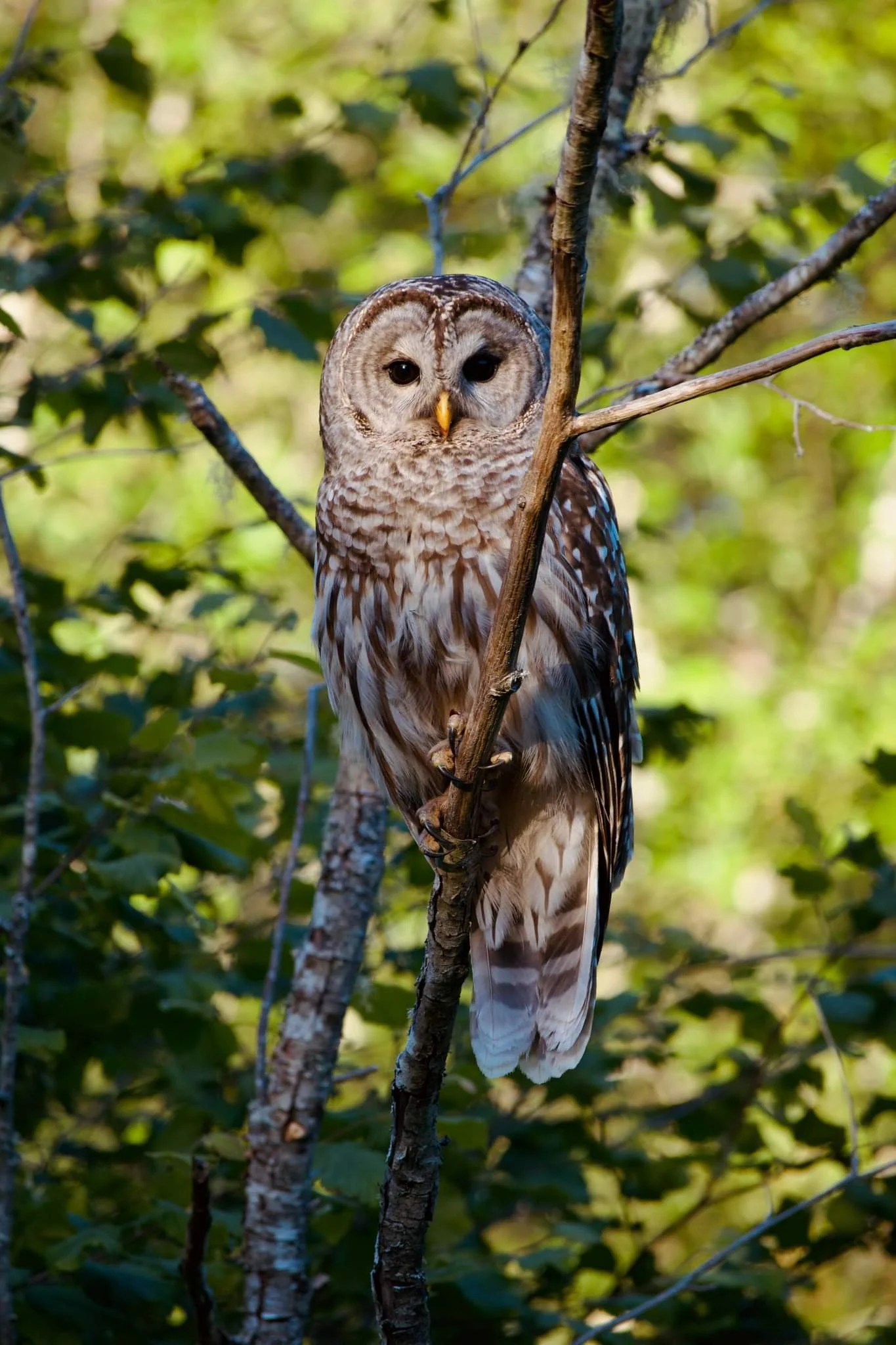
A barred owl watches over the farm - one of the many predatory species that we share our forest with.
I. Introduction
In the fall of 2023, our farm suffered the loss of our entire flock. Until then, I had never lost a bird, which led to overconfidence and complacency. I was later than usual putting the birds away, letting them roam outside their protected pens, and I paid the price. After the loss of that last bird, I stepped away from the garden and the farm for more than a year.
In December 2024, I finally felt ready to begin again. Time let me heal, and starting fresh was exactly what I needed to feel whole again.
Looking forward, ducks and chickens will continue to play a major role in the future of our farm. I have big dreams of becoming far more self-sufficient — and even bigger dreams of farming full-time. Over the next year, I’m hoping to sell hatching eggs and processed birds from my Orpington flocks, along with the extra eggs from my ducks.
II. Choosing the New Breeds
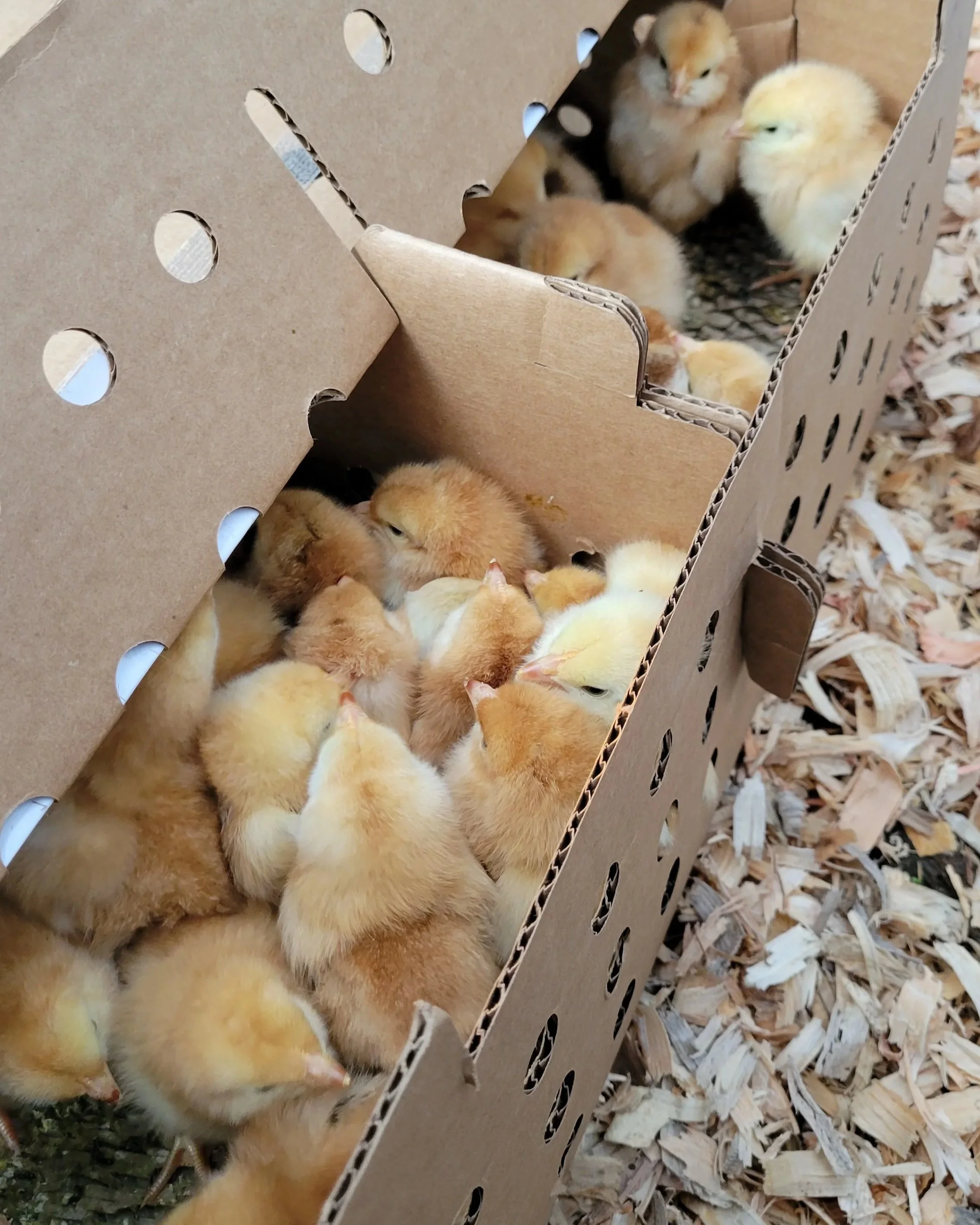
A new flock of 20 buff orpingtons arrives on the farm, only a few days old.
Ducks
Choosing ducks was the easy part. My requirements were simple: high-production layers with a good temperament. I selected several breeds from a reliable hatchery I trusted that were both relatively affordable (as far as ducks go) and fit those criteria.
We ended up with three breeds known for cold hardiness, calm temperaments, and excellent laying abilities:
Cayuga
Blue Swedish
Khaki Campbell
Next year, with the garden expanding to at least twice its current size, I’m debating whether to begin breeding ducks as well. Right now, we only have females, but I may explore adding a meat duck line. If so, I’m looking at large, productive breeds like Jumbo Pekins.
Chickens
Selecting chickens for meat and breeding was a much harder decision. I wanted a breed that was:
A prolific layer
A producer of large to extra-large eggs
A heritage breed, so they breed true
Docile and easy to work with
Naturally broody — I didn’t want to rely on an incubator
Hardy through all seasons
A decent forager
Ready for processing in a reasonable time (20–24 weeks)
Previously, I had raised hybrid meat birds that grew quickly but couldn’t be bred. I also kept a small flock of heritage Black Jersey Giants with the intention of breeding them — but that flock was a nightmare. They were extremely aggressive, to the point where I needed a 2x2 just to let them out of the coop. At nine months old, they ended up too slow to mature and too difficult to butcher. After a long processing day for only a few birds with my mother-in-law, I decided not to raise Jersey Giants again, and processed the remaining flock.
When it came time to select a bird, Buff Orpingtons met every requirement we were looking for. Our first Orpington flock is now 20 weeks old, and I am hoping they’ll begin laying fertile eggs in early spring. They’ve done so well — and the rooster is so gentle — that we’ve already decided to order a second Orpington flock for breeding-line diversity (a whole post on that is coming later).
III. Updated Systems and Infrastructure
Buff Orpington coop.
This year, both the chicken and duck coops received big upgrades, but I’m already planning the next phase for the chickens. I’m considering adding another section to their run: a front space for roosting, feed, and water, and a back area dedicated to nesting boxes, a brooder, oyster shells, and a heat lamp for any winter chicks.
I also plan to expand the chicken pen to nearly four times its current size to improve forage, reduce pressure on the land, and allow for rotational grazing. Alongside that, I’ll be building a second “B” pen to keep separate bloodlines in the meat-bird flocks. Sustainability starts with good genetics.
This spring, I’ll be planting high-protein corn, Jerusalem artichoke, mulberry, winter peas, oats, sunflowers, and other cover crops to support the flock through winter with light forage and mostly stored feed. I’m also intentionally planting edible shrubs to provide year-round supplemental forage — things like elderberry, chokeberry, and highbush cranberry.
IV. The Emotional Side of Rebuilding
Rebuilding didn’t come easily. I carried a lot of hesitation and doubt. Losing the flock felt like a direct reflection of my ability to farm, and for months, I saw it as proof that I had failed rather than simply being inexperienced.
But each step toward rebuilding brought a new perspective and new life to the farm. When the chicken coop was finished just weeks before the new chicks arrived, I felt excitement and drive return to me in a way I hadn’t felt in a long time.
The flock helps me reconnect with the land. They force me to pay attention, to assess what’s working, what needs improvement, and what comes next. Every season brings new challenges and new opportunities to learn, but all of it means I get to keep my hands in the dirt, and that is where I feel most myself.
This year alone, I raised a duck flock of five, an Orpington flock of seventeen, and a hybrid meat flock of forty. I began the year cautiously, but that caution slowly gave way to hope. Moving forward is the only direction that feels right.
V. Looking Ahead
I’m hopeful that my current Orpington flock will begin growing steadily in the spring, and I’ll be able to assess what flock size our farm really needs. I expect the duck flock to grow as well, and in spring 2026, a new Orpington flock will arrive to strengthen our breeding lines.
With fencing updates planned and new pens on the horizon, I’m also preparing for some larger livestock additions in summer 2026.
I invite you to follow along with our weekly blogs as we continue building, learning, and growing — one season at a time.