The Garden Doesn’t Owe Us Results
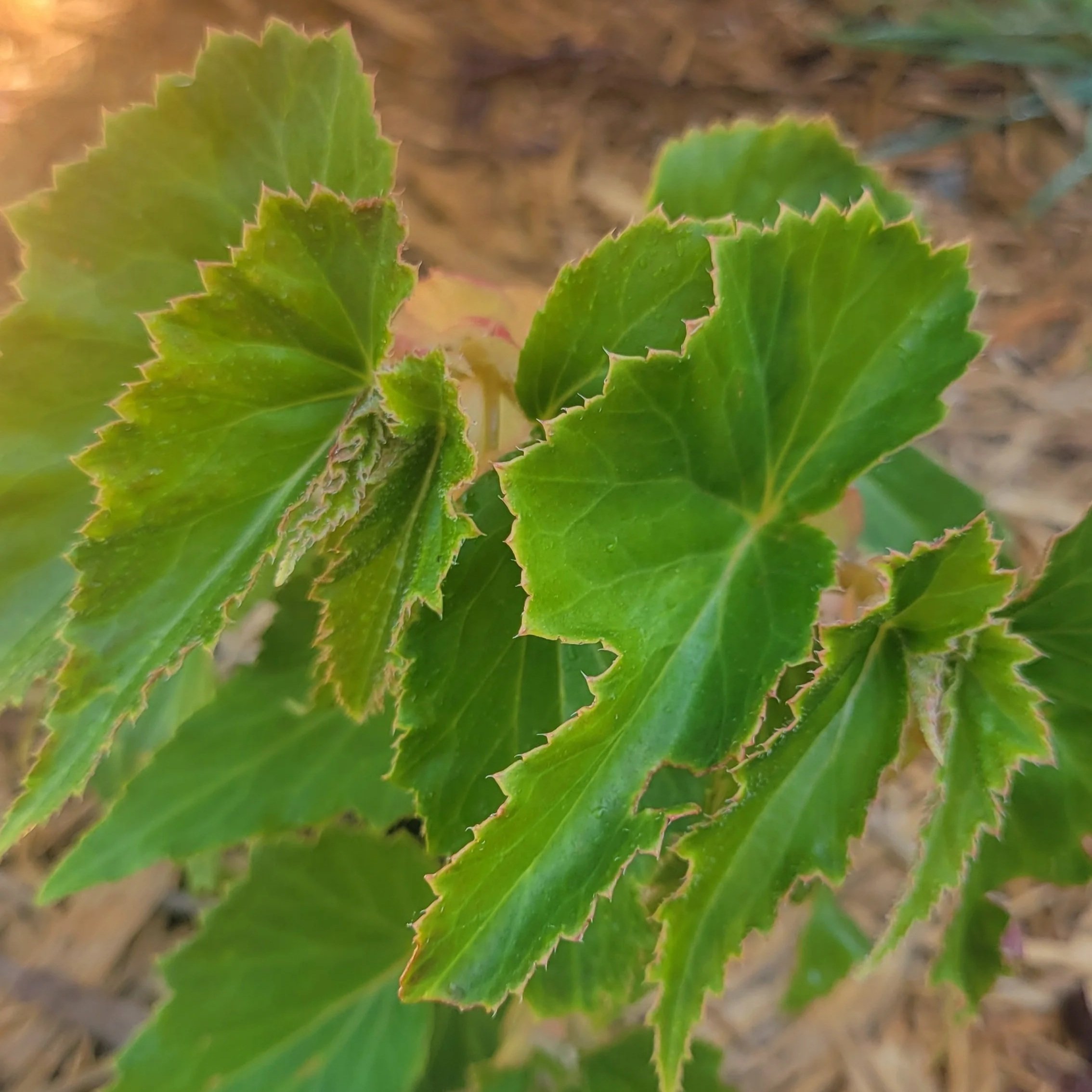
A newly emerging begonia
Whatever it is, the way you tell your story online can make all the difference.
The Garden We Imagine
Every spring beings with a new sense of optimism with the new season.
Seed catalogs litter the table, with every variety carefully chosen. Seeds are started under lights, while beds are prepared outside — weeded, composted, and mulched. We make plans for everything that will grow and imagine a season where every plant reaches its full potential, with bountiful harvest.
Then it becomes evident that the garden has plans of its own.
This year, some of the plants I was most excited about struggled. Others that I barely thought about have thrived.
In the garden, effort matters but sometimes it just isn’t enough.
Five Things Every Plant Needs
1. Sunlight
Even a few hours of sunlight can make a difference, and not all sunlight is equal.
Right now, I have several blueberry bushes sitting on my porch waiting to be planted. Blueberries are known for loving full sun, and technically they're getting exactly that. The problem? The intense afternoon sun was scorching their leaves.
Many gardeners struggle because plants don't receive enough sunlight. Trees, fences, and neighboring plants create shade where we don't expect it. In my case, some areas get a little too much sun. The lesson is that "full sun" isn't a one-size-fits-all recommendation. Every garden has its own microclimates, and understanding them can make a huge difference.
2. Soil
Plants grow from the ground up, but it's easy to focus only on the parts we can see.
Healthy soil isn't just dirt. It's a complex system that affects how water moves, how roots grow, and how nutrients become available to plants. Soil texture, organic matter, drainage, compaction, and nutrient levels all play a role.
I have more than 1,000 square feet of garden space, and no two beds are exactly alike. Here in the Pacific Northwest, much of our soil is rocky glacial till. Some beds are loose and well-draining, while others contain pockets of dense red clay. Beds sitting side by side can produce completely different results because the soil beneath them is different.
One lesson I've learned is not to assume a problem can be fixed with fertilizer. Before adding nutrients, get a soil test. For example, blossom end rot in tomatoes is often blamed on a lack of calcium, but more often it's caused by inconsistent watering. The plant can't move calcium properly when it's stressed. Adding more calcium won't solve the problem, but consistent irrigation often will.
3. Timing
Sometimes success comes down to planting at the right moment.
A late frost can wipe out warm-season crops overnight. A stretch of summer heat can cause lettuce to bolt before you harvest a single leaf. Even healthy transplants can struggle if they're moved during unfavorable conditions.
Two plants can receive identical care and have completely different outcomes simply because one was planted at the right time and the other wasn't.
4. Water
If I had to guess the number one reason home gardeners lose plants, I'd say overwatering.
Many of us see a wilted plant on a hot day and immediately reach for the watering can. But wilt doesn't always mean the soil is dry. Overwatering deprives roots of oxygen, leading to rot and weak plants.
Whenever someone tells me they "kill every plant they buy," the first question I ask is whether they might be watering too much. The answer is usually yes.
Plants have different water needs. Some thrive in dry conditions, while others require consistent moisture. The goal isn't simply to water more—it's to water appropriately and consistently.
Before watering, check the soil. Push a finger into the ground up to your first or second knuckle. If the soil is still moist, wait. If it's dry, water deeply. Consistent watering prevents stress and helps plants make the most of the nutrients already available to them.
5. Luck
Gardeners don't always like to admit it, but luck plays a role.
Maybe a slug finds one seedling and ignores the rest. Maybe your neighbor battles cucumber beetles while your cucumbers stay untouched. Maybe a deer wanders through the garden and somehow misses the one plant you were most worried about.
We can improve our odds through good gardening practices, but we can't control everything. Nature always gets a vote.
And honestly, that's part of what keeps gardening interesting.
What This Year’s Garden is Teaching Me
Not every failure is a mistake
Sometimes conditions simply aren't right. Other times, you solve one problem only to discover another waiting right behind it. As a teacher, I deeply believe that without failure there is no learning, and without learning there is no true understanding. I've worked hard to view failure as motivation to build something better. Not perfect—just better.
Every failed crop, pest outbreak, and disappointing harvest has something to teach us if we're willing to pay attention.
Observation matters more than perfection
The garden has a lot to teach you if you're willing to listen.
Recently, someone mentioned spraying their flowering ornamentals with Sevin after discovering an aphid infestation. While the aphids were causing damage, they weren't likely to kill the plants. I suggested taking a closer look before reaching for the spray bottle.
Sure enough, flipping over a few leaves revealed ladybug larvae and newly emerged ladybugs already hard at work. Sevin would have solved the aphid problem, but it would have also killed the beneficial insects that were beginning to restore balance.
Watch, wait, and listen to what the garden is showing you. Nature has been growing plants and managing pests long before people felt the need to rush in to fix it.
Success isn’t evenly distributed
Right now, I have plants that are thriving and beautiful. For the first time, I feel like my short beds are truly protected from deer, and my pest management efforts are paying off.
At the same time, a deer recently ate my healthy, flowering peas down to the ground in one of my less-protected long beds. And I just discovered that what I thought was half a bed of hardneck garlic is actually wheat, which turns out to look surprisingly similar when it's young.
My lettuce looks incredible, but my carrots never sprouted. My apple tree is thriving, while my cherry tree didn't survive the winter.
I've learned that I can feel grateful for what's working while also feeling frustrated by what isn't.
In the garden—and on the farm—success and failure always seem to exist side by side.
The Garden Doesn’t Owe Us Results
One of the reasons I keep gardening is that it continually teaches patience.
You can do everything "right" and still lose a plant. You can forget about a corner of the garden and discover something thriving there. The garden doesn't care about our plans, schedules, or expectations.
The goal isn't to control every outcome. The goal is to observe, adapt, and keep growing alongside the garden.
And sometimes the most valuable harvest isn't the vegetables, flowers, or fruit. Sometimes it's the reminder that not everything in life follows a plan, and that growth can still happen anyway.