Failure Built These Systems
A New Opportunity
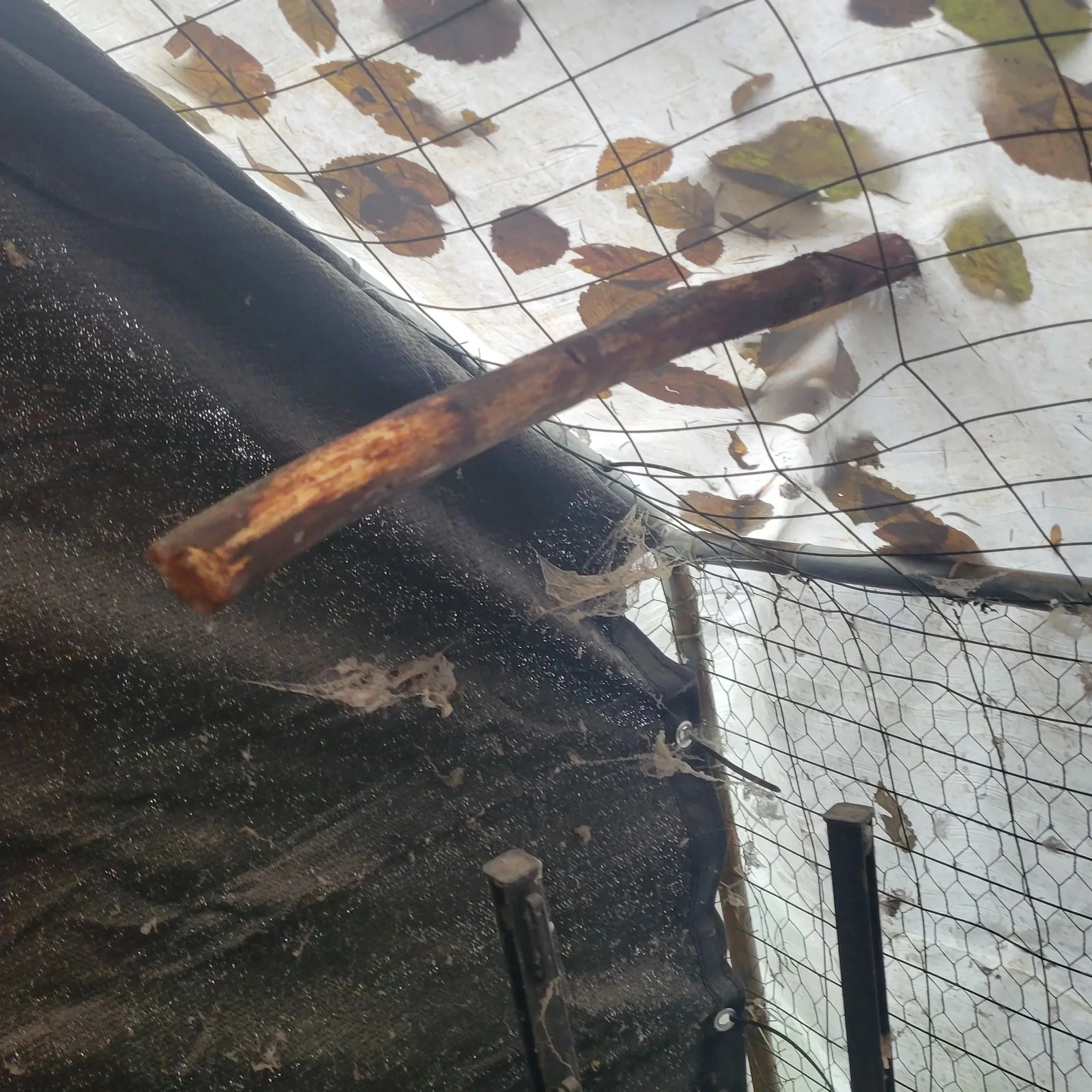
During a windstorm last winter, a tree fell and missed the duck coop by inches. This branch, however, highlighted an important weakness in the roof of the duck coop.
Farming may look picture-perfect on Pinterest, but it is not an easy life to choose. Whether someone farms in the middle of a city or deep in the countryside, challenges and failures are inevitable.
For a long time — more than a year, really — I viewed failure as a stopping point.
I was freshly postpartum, dreading my return to work, and the losses on the farm felt heavier than I could bear. So I stopped. I did not grow plants or raise livestock. Instead, I allowed myself time to heal.
And somewhere in that healing, I realized something important: failure is not a place to remain stuck. Failure is an opportunity to examine the systems we have in place and choose to build something better.
Overhead Protection
I lost several full flocks of birds to predators — mostly owls, but bald eagles as well. While the garden area where my birds roam is enclosed with fencing, it borders the forest, leaving them vulnerable to aerial predators.
Last summer, I finally installed overhead netting above both the chicken and duck areas. Combined with reinforcing the fencing below, I have not lost a bird to predators since.
The biggest reason it took me so long to install overhead protection was simple: I had no idea how to approach a project on that scale. The garden itself stretches over 100 feet long and 50 feet wide, with plans to double in size next year. The magnitude of the project kept me frozen for far too long.
But when my new flocks of ducklings and chicks arrived last summer, I realized I was tired of raising birds for predators to eat.
The netting itself was not the end of the story — as evident in the blog post, “When the Net Fell” — but it taught me something important: overhead protection is not optional on my farm.
Now, I am working toward a more permanent solution using a reinforced paracord grid supported with steel cable wire. The goal is to allow snow and debris to pass through while still creating enough visual disruption to deter birds of prey. Much of predator prevention is psychological. The system does not need to be impenetrable; it simply needs to convince predators that easier opportunities exist elsewhere.
Fence Reinforcements
Aerial predators were not my only problem.
In 2023, we lost an entire flock to raccoons. Ring camera footage showed their nightly visits and destruction, but raccoons are far from the only predators in the Western Washington woods. Mink, skunks, foxes, and other small predators are all capable of slipping through standard field fencing.
Last spring, I wrapped the entire perimeter fence in tightly stretched chicken wire secured with steel wire. It was a relatively simple reinforcement, but it drastically reduced vulnerabilities. Now, anything entering the bird pens must either dig underneath or climb over the fencing.
That does not mean the birds are completely safe — they never will be — but I have not seen evidence of coyotes, bears, or cougars attempting to breach the fence so far. I hope it stays that way until additional reinforcements can be added.
Deer Protection
While deer pose no threat to the birds, they are by far the greatest threat to my crops.
Year after year, they found ways into the garden. But over time, I began learning how deer behave and how to work with those instincts instead of against them.
One important thing I discovered is that deer dislike entering spaces that feel confining or uncertain. Last year, I used netting around sections of the garden, and while they occasionally pushed against it, they never willingly stepped inside enclosed spaces.
This year, I raised the netting high enough that I can simply unclip it and walk inside to weed or harvest. Despite the deer’s constant presence around the property, they have not touched the garden this season.
For my farm, dividing the garden into individually protected spaces has proven far more effective than relying on one large perimeter fence alone. This is the first season since creating the garden that I have not seen deer — or evidence of deer — inside the growing area.
Slug Control
At least owls are majestic and deer are cute. Slugs are simply my archnemesis, with the audacity to be ugly while doing it.
This year, they nearly destroyed my rhubarb before I finally got ahead of them.
Much of my success with slug control comes from the ducks. Although they always have access to pelleted feed, they spend their days foraging through the bark pathways searching for slugs, and during much of the year, they are allowed free access to many garden beds. I also try to encourage natural predators, like garter snakes, by building spaces where they are likely to shelter.
Beyond biological controls, I recently added an organic-approved slug treatment to my systems. Since the farm practices organic methods, I have always avoided pesticides and herbicides whenever possible. However, through an agriculture course, I learned that Sluggo is OMRI-listed, targeted rather than broad-spectrum, and biodegradable.
Now, I apply it when seedlings are first transplanted — before ducks are allowed into those areas — and reapply only as needed. Combined with regular hand-picking during morning and evening garden walks, slug damage inside the garden has become minimal.
While slugs still thrive throughout the rest of the property, the garden itself remains largely protected.
Managing the Ducks
I love raising ducks.
They are excellent for pest and weed control, provide eggs nearly year-round, and honestly, they are incredibly entertaining animals to keep.
That said, ducks and seedlings are not always compatible.
Established plants are generally safe around them, but tender greens and young seedlings can quickly become casualties. Since the entire purpose of keeping ducks is to integrate them into the garden system, I have spent several seasons learning how to protect vulnerable crops without removing the ducks from the equation entirely.
Last year, I built small hoop-style frames covered in netting. They worked reasonably well, though the ducks still occasionally found ways underneath.
This year, I switched to temporary fencing made from 3-foot garden stakes and 2-foot chicken wire surrounding sensitive beds. The system is simple, removable, and effective. Once plants mature, the fencing can be removed and the ducks allowed back into those spaces to forage and clean up pests.
What Still Is Not Working
While I have made significant progress in securing and improving the farm, there are still systems that need work.
First, the irrigation system is inefficient and wasteful. Over the coming months, I hope to transition toward targeted drip irrigation with automated controls instead of relying primarily on overhead watering. This will reduce water waste while also minimizing disease pressure from issues like blight.
Second, while the temporary fencing around the beds is effective, it is not a permanent solution. Over the winter, I hope to raise many of the garden beds and install wooden-framed sections with tightly stretched wire panels and access doors. This would allow easier rotational access for the ducks while protecting crops and maintaining living clover mulch throughout the beds.
Lastly, the second garden space still needs to be expanded using everything I have learned from the first.
Because the goal is not simply to grow bigger. The goal is to stop repeating the same mistakes.