Winter is working on settling in around the farm — the kind of cold that slows everything down and makes the woods feel twice as quiet. People often talk about this season as a time of rest and renewal, where growing pauses and chores wait for sunnier days. And while it’s true that winter in the PNW is far from balmy, winter on our farm doesn’t hit the brakes. The growing season keeps pulsing along, and there are still chores to finish, fences to build, and projects waiting their turn.
This winter, we’ve got a full lineup of projects and a set of big goals right behind them. Even in winter, there’s always something happening around here. It’s hard to stay still when spring feels like it’s racing toward us.
What We’re Focusing On
Growing cool-season crops
Garlic cloves are overwintering, and our onions, lettuce, spinach, broccoli, and Brussels sprout seeds are just about ready to be started indoors.
Bringing our meat chickens into maturity
Our heritage Buff Orpington flock is almost ready to breed and lay. With only one rooster in this pen, we expect plenty of eggs for sale and just enough chicks to sustain us through the year.
Prepping the pen for flock #2
We’re aiming for a true closed-loop system — raising livestock without relying on outside birds. That means building a separate pen for a second flock of heritage Orpingtons, completely unrelated to our first. With two pens, we can rotate and swap birds to keep the bloodlines strong and healthy.
Clearing underbrush and moving fencing
We’re pulling hundreds of feet of new fencing and clearing the last of the underbrush along the perimeter. One of our biggest goals this year is to finish the full perimeter fence by spring. It’s a necessary step before we welcome a new group of animals to the farm by late summer or early fall. Stay tuned — we’ve got something exciting brewing.
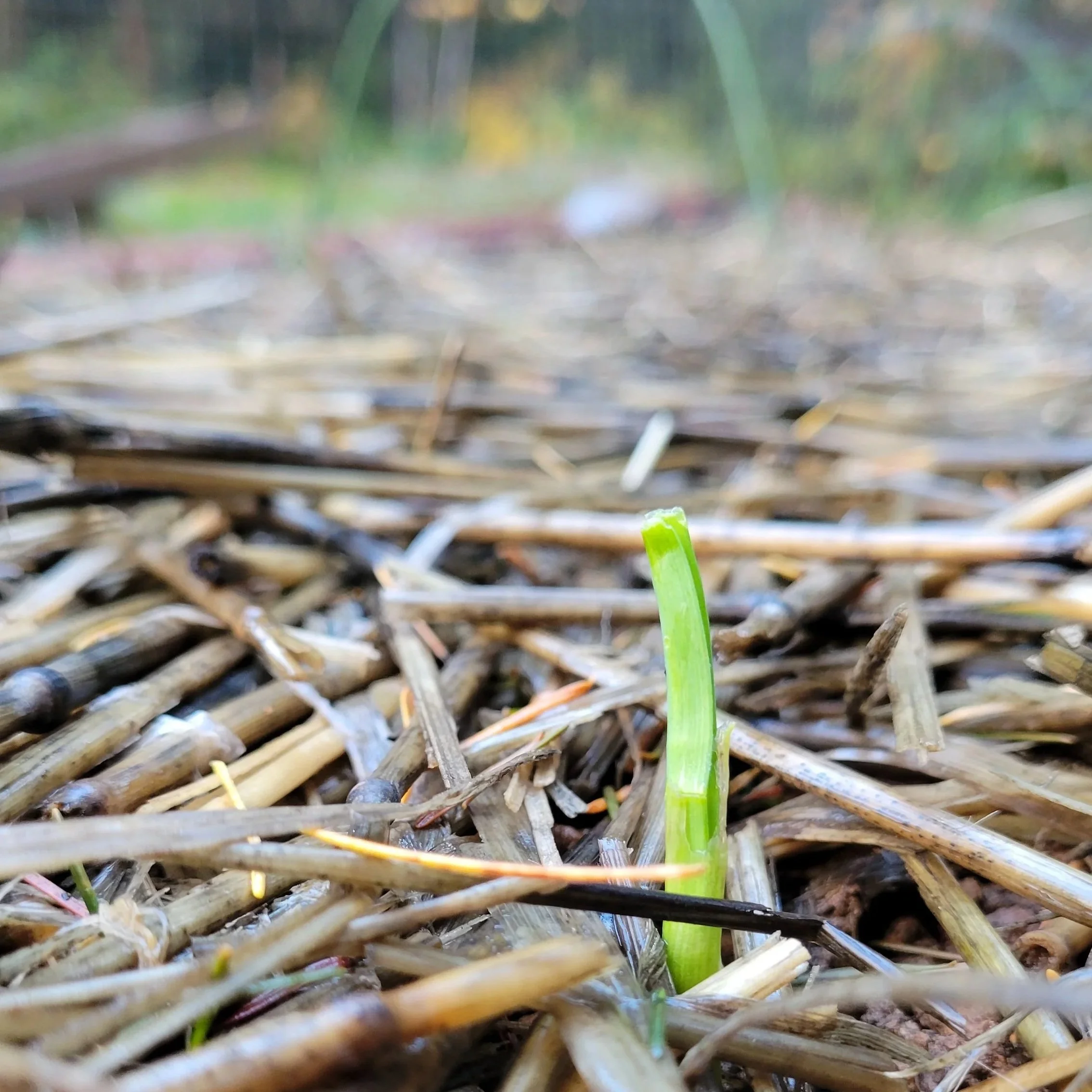
A garlic bed, planted with over 100 cloves, is sprouting just before the winter colds sets in.
In the Garden
Even in winter, the garden never truly sleeps. Celery and garlic are still growing strong without cover. We haven’t had a hard freeze yet — almost unheard of by December. Our typical frost date is early to mid-October, but this year we’ve only seen one light freeze.
Part of me knows this could mean a rough, late winter is lurking; part of me suspects this is simply becoming our new norm as climate patterns shift.
This season, we’re working on:
Laying cardboard weed block
We smother tough weeds with cardboard and cover it in mulch. In walkways, we use rough-cut cedar pathway bark — spongy underfoot and great for keeping paths defined.
Starting and overwintering seeds
Winter is planning season: ordering seeds, mapping timelines, deciding what gets started indoors and what must be direct-sown, and timing everything for our short warm-season window in zone 8b. Missing the window means late harvests — something we can’t afford when summer is brief.
Leaning into winter crafts
With so few daylight hours, some days it’s impossible to get outside after work. Winter becomes the perfect time for soap and candle making, or for painting on dark, stormy evenings.
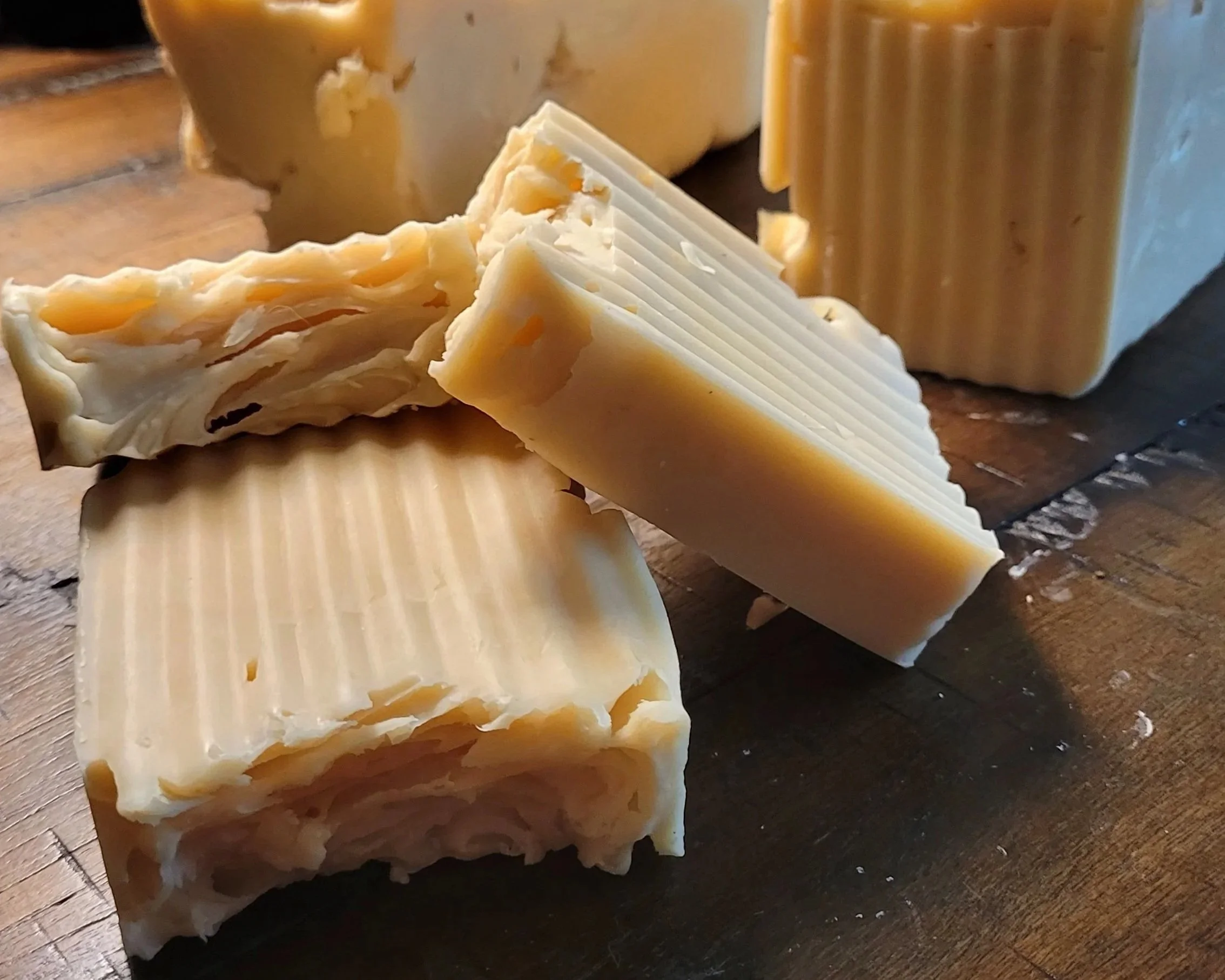
A batch of hand-poured, cold process soap has just been cut.
Animals + Daily Life
As winter settles in, we enter that stretch of low-horizon sun and biting cold, with more darkness than most people care for. But every day, the Earth keeps turning — and the animals still need tending.
Here’s how we’re keeping everyone comfortable:
Feed adjustments, upgrades & winter watering
Our ducks and chickens graduated from small 3-gallon gravity feeders to 50-lb feeders that hold an entire bag of feed. While our long-term goal is to grow the majority of our feed onsite, winter complicates things — growth slows, forage disappears, and overgrazing becomes a real risk.
Our 13 Buff Orpingtons go through feed roughly every other week (they’re heavy, slow-growing birds with big appetites). Our five ducks, being expert foragers, need far less supplementation and only require feed refills around once a month.
Water is refreshed every few weeks or whenever it looks dirty, though the constant rain helps keep tanks full. As temperatures drop, we’ll bring in water heaters to keep things from freezing.
Housing through wet-season challenges
The farm’s borders brush up against seasonal wetlands — beautiful, but tricky. Sometimes those wet edges creep a little too close to the chicken coop. By summer, we’ll be installing a French drain to keep things dry.
For now, fresh bedding keeps moisture and ammonia under control, especially since we use the deep-litter method. Chickens hate the rain, which means more foot traffic in the coop and more bedding turnover. Ducks, however, live for rain — they spend far less time inside, so their bedding stays clean much longer.
What We’ve Learned
Every season teaches something. As fall comes to an end, the lesson this season has been business planning.
The dream has always been that this farm would support our family with ethically raised livestock living on silvopasture, always treated with respect and gratitude for their service and sacrifice. The dream included produce with heirloom stories — flavor and authenticity you can’t buy at a grocery store — all grown without pesticides, herbicides, or purchased fertilizers.
This year, as I regained my footing, watched the animals flourish, and tended the garden every day, I realized this farm has to become something more.
I remember watching my daughter on her swingset, imagining the pasture behind her full of livestock, with mature hazelnut trees rising through her forest backdrop. As summer faded into fall, something shifted. The need to turn our hobby farm into a market farm grew louder and louder.
Suddenly I understood: the soil, the trees, the farm itself call to me in a way I can’t ignore. My every spare thought — and as a special educator and mom of a toddler, spare thoughts don’t come often — became about how to become a full-time farmer. Something I never originally set out to be.
And so, everything began. In the last few months, startup costs have been planned, business plans written and rewritten, marketing reimagined, and the constant question of, “How do I turn this into my full-time business?” has never left my mind.
I’ve been applying for agricultural entrepreneurship courses, networking conferences, and grants. And knowing myself, I’m almost certain that the lesson by the end of winter will be a hard one in patience.
What’s Coming Next
Winter may be slow, but spring is already calling.
Up next on the farm:
Finish the perimeter fencing
Start seeds indoors
Work on the next round of candles and soaps for sale
If you want early availability on fresh eggs; pre-sales for upcoming products like soaps, candles, plant starts, or meat bird orders; and early sneak peeks at what’s coming next for the farm, don’t forget to sign up for the monthly newsletter!
Closing
Thanks for reading and wandering through this season with us. Winter might be quiet, but it’s full of its own kind of magic — the kind that grows roots before it grows leaves.
See you right here next season,
Kaila from Forestside Farm & Garden